

The latest news on global issues
Provided by AGP
Spray and soil: a smart silicon solution for safer rice
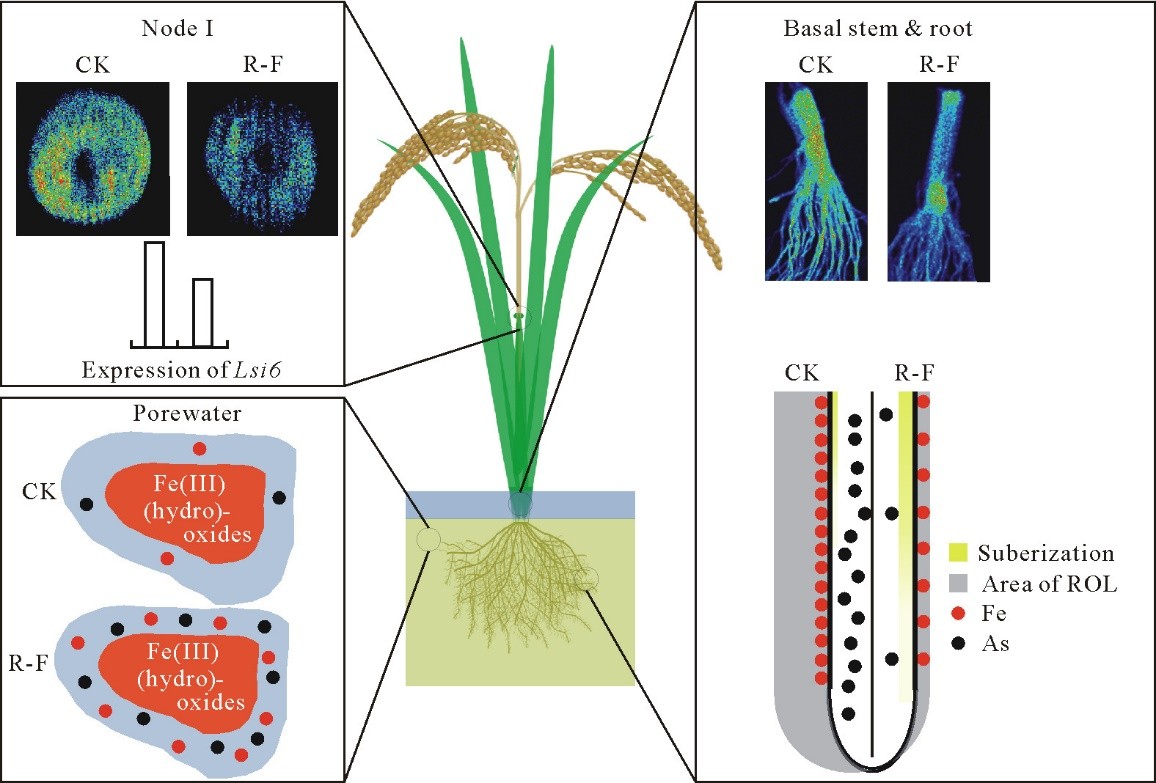
Schematic diagram showing the mechanisms for mitigation of inorganic As accumulation in rice grains by rhizosphere processes and in-vivo transport with synergistic application of Si. Synergistic Si application decreased As concentration on root surface wi
GA, UNITED STATES, May 26, 2026 /EINPresswire.com/ -- Arsenic contamination in rice is a growing food safety concern in Asia. A new study presents a cost-effective, sustainable solution using silicon extracted from rice husks. By applying silicon both to the soil and as a foliar spray during the rice’s reproductive stage, researchers achieved a substantial reduction in arsenic accumulation in grains. The combined approach not only enhanced silicon uptake but also reprogrammed plant responses—strengthening root barriers and dialing down arsenic transport genes. The results from both pot and field trials reveal a powerful synergy between root and foliar applications, offering a practical strategy to reduce arsenic exposure through rice consumption.
Paddy fields across Asia are facing a silent threat—arsenic contamination that makes its way into rice grains. Silicon plays a dual role in rice physiology: it's essential for plant health and also competes with arsenic for uptake pathways. However, decades of harvesting without silicon replenishment have drained the soils of this crucial element. While commercial silicon fertilizers exist, they are often too costly for widespread use. Meanwhile, rice husks—rich in silicon and often discarded—remain an untapped resource. Due to these challenges, researchers are seeking innovative ways to turn agricultural waste into a defense mechanism against arsenic toxicity in rice.
In a study published in Pedosphere on June 20, 2025, scientists from Hunan Normal University and the University of Massachusetts Amherst introduced a new two-step approach to tackle arsenic contamination in rice. The method combines soil enrichment with combusted rice husk (CRH) and foliar spraying of husk-derived silicon at the rice plant’s reproductive stage. Through pot and field experiments, the team demonstrated that this synergistic method significantly reduces arsenic uptake and grain accumulation, particularly in high-risk, arsenic-laden fields. The findings offer a compelling strategy to improve food safety using affordable, waste-based materials.
The research team designed a dual application system to target rice’s critical growth period. In controlled pot trials, they first amended soil with CRH—a slow-release silicon source—and followed up with a foliar spray just before the reproductive stage. This timing was crucial: arsenic uptake spikes when soil silicon naturally dips. The results were striking. Compared to soil application alone, the combined method reduced root-surface arsenic by 51% and grain arsenic by 28%. These reductions were linked to stronger root suberization, diminished root oxidation capacity, and a 91% suppression in Lsi6, a key gene regulating arsenic transport.
In field experiments, the approach held strong. In soils with high arsenic levels (60–80 mg/kg), only the dual application brought grain arsenic below China’s food safety threshold. By contrast, foliar application alone sometimes exacerbated arsenic uptake. Interestingly, the foliar spray used just 0.5% of the silicon dose compared to the soil treatment, hinting at a signaling role beyond nutrient supplementation. The study underscores that timing, dosage, and delivery method all matter—and together, they can make rice safer to eat even under contaminated conditions.
“Rice is uniquely vulnerable to arsenic because it absorbs it through the same channels as silicon,” explained Dr. Xin Wang, lead author of the study. “By synchronizing silicon delivery to match the plant’s needs, we’re not just supplementing nutrients—we’re reprogramming how the plant handles arsenic. Our dual strategy strengthens the root barrier and redirects arsenic away from the grain. It’s a simple, scalable fix rooted in agricultural waste that could change how we manage rice safety.”
This two-pronged approach presents a promising, farmer-friendly solution for managing arsenic in rice. By repurposing rice husks—a widely available agricultural byproduct—the strategy turns waste into a valuable input for crop safety. Its low cost and ease of application make it especially appealing for regions where commercial silicon fertilizers are out of reach. Moving forward, researchers aim to refine the production of combusted husk to reduce carbon emissions and improve scalability. With further testing, this method could be adapted to other crops and regions, offering a replicable model for mitigating heavy metal contamination in global food systems.
References
DOI
10.1016/j.pedsph.2024.05.009
Original Source URL
https://doi.org/10.1016/j.pedsph.2024.05.009
Funding information
This research was supported by the National Natural Science Foundation of China (No. 42377024), the Aid Program for Science and Technology Innovative Research Team in Higher Educational Institutions of Hunan Province, China, and the Key Project of Developmental Biology and Breeding from Hunan Province of China (No. 2022XKQ0207).
Lucy Wang
BioDesign Research
email us here
Legal Disclaimer:
EIN Presswire provides this news content "as is" without warranty of any kind. We do not accept any responsibility or liability for the accuracy, content, images, videos, licenses, completeness, legality, or reliability of the information contained in this article. If you have any complaints or copyright issues related to this article, kindly contact the author above.
