

Oncology Mice Models Market Set for 9.8% CAGR Through 2033, Says Persistence Market Research
oncology mice models market
Advanced mice models support oncology research by enabling preclinical testing of cancer therapies, improving drug discovery, immune studies.
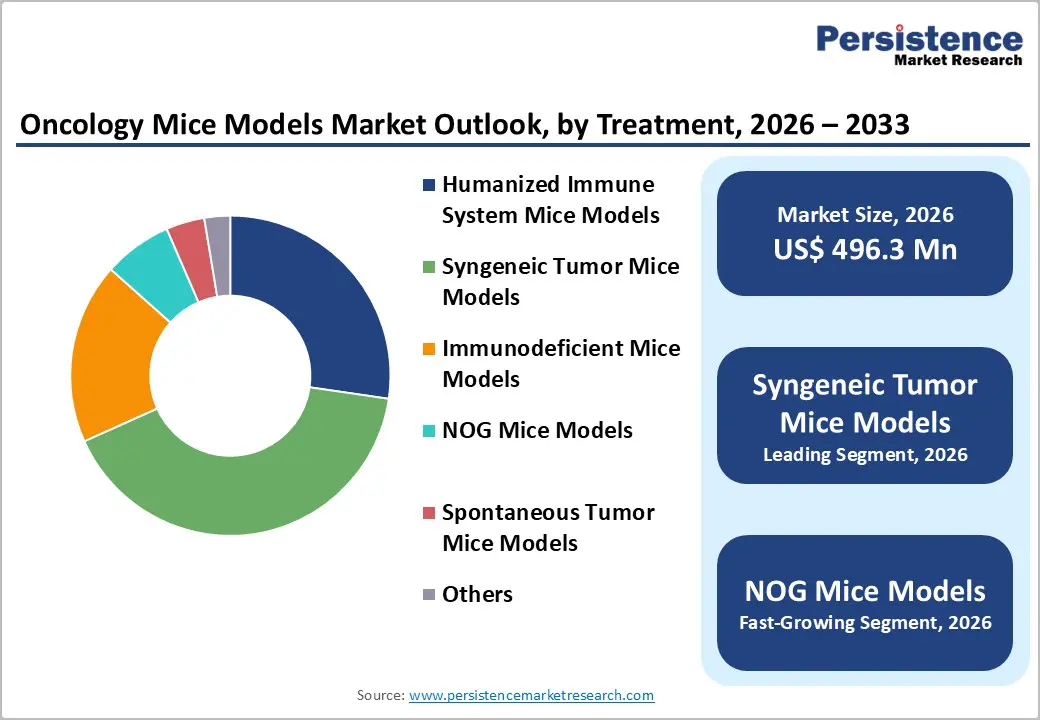
LONDON, UNITED KINGDOM, March 16, 2026 /EINPresswire.com/ -- The oncology mice models market is witnessing steady growth as cancer research becomes more advanced and focused on personalized therapies. These models play a crucial role in preclinical studies, allowing researchers to evaluate tumor biology, drug efficacy, and immune responses before treatments enter clinical trials. The global oncology mice models market is estimated to grow from US$496.3 million in 2026 to US$746.3 million by 2033. This expansion reflects a projected compound annual growth rate (CAGR) of approximately 6.0% during the forecast period from 2026 to 2033.
Download Your Free Sample & Explore Key Insights: https://www.persistencemarketresearch.com/samples/33046
Market Drivers
One of the primary drivers of the oncology mice models market is the rapid growth of immuno-oncology and cell-based therapies. Immuno-oncology treatments focus on stimulating the body's immune system to recognize and attack cancer cells. Over the past decade, therapies such as immune checkpoint inhibitors, CAR-T cell therapies, and combination immunotherapies have significantly transformed cancer treatment strategies. As a result, researchers require advanced preclinical models capable of accurately representing human immune responses.
Mouse models such as syngeneic, humanized, and genetically engineered variants enable scientists to evaluate immune interactions, treatment toxicity, and therapeutic efficacy in controlled environments. These models are particularly valuable for studying checkpoint inhibitors and adaptive cell therapies before clinical trials begin. The increasing number of immuno-oncology clinical trials and drug development programs is therefore contributing significantly to market growth.
Market Restraints
Despite strong growth prospects, the oncology mice models market faces certain challenges. One of the most significant restraints is the high cost associated with developing and maintaining specialized mouse models. Genetically engineered and humanized models require complex breeding processes, genetic validation, and specialized housing facilities. As a result, these models can cost significantly more than standard laboratory mice.
Additionally, regulatory and ethical requirements for animal research add to operational expenses. Compliance with strict animal welfare guidelines requires upgraded facilities, trained veterinary staff, and detailed documentation. These factors can create financial barriers for smaller biotechnology firms, academic laboratories, and research institutions with limited funding.
Market Opportunities
The integration of oncology mice models with precision oncology and biomarker research presents a significant opportunity for market expansion. Precision oncology focuses on tailoring treatments based on the genetic and molecular characteristics of individual tumors. With the growing use of next-generation sequencing technologies, many cancer therapies are now developed based on specific biomarkers.
Mouse models can be engineered to replicate these molecular profiles, enabling researchers to test targeted therapies in biologically relevant environments. Such models allow scientists to evaluate treatment responses, identify resistance mechanisms, and refine biomarker-driven therapeutic strategies.
Get Custom Insights Designed for Your Businecss: https://www.persistencemarketresearch.com/request-customization/33046
Segment Analysis
By product type, syngeneic tumor mice models dominate the oncology mice models market. In 2025, this segment accounts for approximately 41.0% of the global market share. These models are widely used in immuno-oncology research because they allow tumor growth in immunocompetent mice with fully functioning immune systems.
Unlike xenograft models, which require immunodeficient hosts, syngeneic models preserve natural immune interactions. This characteristic makes them particularly useful for studying immune checkpoint inhibitors, cancer vaccines, and combination therapies. Their cost-effectiveness and reproducibility further support their widespread adoption in preclinical oncology studies.
Regional Insights
North America currently dominates the global oncology mice models market, accounting for approximately 44.0% of the total market share in 2025. The region benefits from strong research infrastructure, significant investment in biotechnology and pharmaceutical innovation, and extensive collaboration between academic institutions and industry players. Government funding for cancer research and the presence of leading biotechnology clusters further strengthen the region’s position.
Europe also represents a significant market due to its advanced healthcare systems and strong research networks. Countries such as Germany, the United Kingdom, and France maintain robust oncology research programs supported by public funding and collaborative initiatives. These factors encourage the development and adoption of sophisticated preclinical models.
The Asia-Pacific region is expected to experience the fastest growth during the forecast period. Rapid expansion of healthcare infrastructure, increasing cancer incidence, and rising government investment in biomedical research are driving regional market growth. Countries such as China and India are strengthening their research capabilities and expanding contract research organization activities, making the region an emerging hub for oncology research and preclinical studies.
Checkout Now & Download Complete Market Report: https://www.persistencemarketresearch.com/checkout/33046
Competitive Landscape
The oncology mice models market features a competitive landscape comprising biotechnology firms, laboratory animal suppliers, and contract research organizations specializing in advanced preclinical services. Key market participants focus on developing innovative mouse models with improved translational relevance and reliability.
Companies are increasingly investing in technologies such as CRISPR-based genetic engineering, humanized immune system models, and integrated data analytics platforms to enhance research outcomes.
Global Oncology Mice Models Market Segmentation
By Product
Humanized Immune System Mice Models
Syngeneic Tumor Mice Models
Immunodeficient Mice Models
NOG Mice Models
Spontaneous Tumor Mice Models
Others
By End User
Contract Research Organizations
Pharma and Biopharma Companies
Academic and Research Institutes
By Region
North America
Europe
East Asia
South Asia & Oceania
Latin America
Middle East and Africa
Read Related Reports:
Ankle Arthritis Treatment Market: The ankle arthritis treatment market is projected to grow from US$1.4 Bn in 2026 to US$2.1 Bn by 2033, driven by rising osteoarthritis & post-traumatic cases requiring pain management.
Patient Cleansing Products Market: The patient cleansing products market to grow from US$2.7 Bn in 2026 to US$5.1 Bn by 2033, fueled by demand for safer hygiene solutions to prevent infection.
Persistence Market Research
Persistence Market Research Pvt Ltd
+1 646-878-6329
email us here
Visit us on social media:
LinkedIn
Instagram
Facebook
YouTube
X
Legal Disclaimer:
EIN Presswire provides this news content "as is" without warranty of any kind. We do not accept any responsibility or liability for the accuracy, content, images, videos, licenses, completeness, legality, or reliability of the information contained in this article. If you have any complaints or copyright issues related to this article, kindly contact the author above.
